
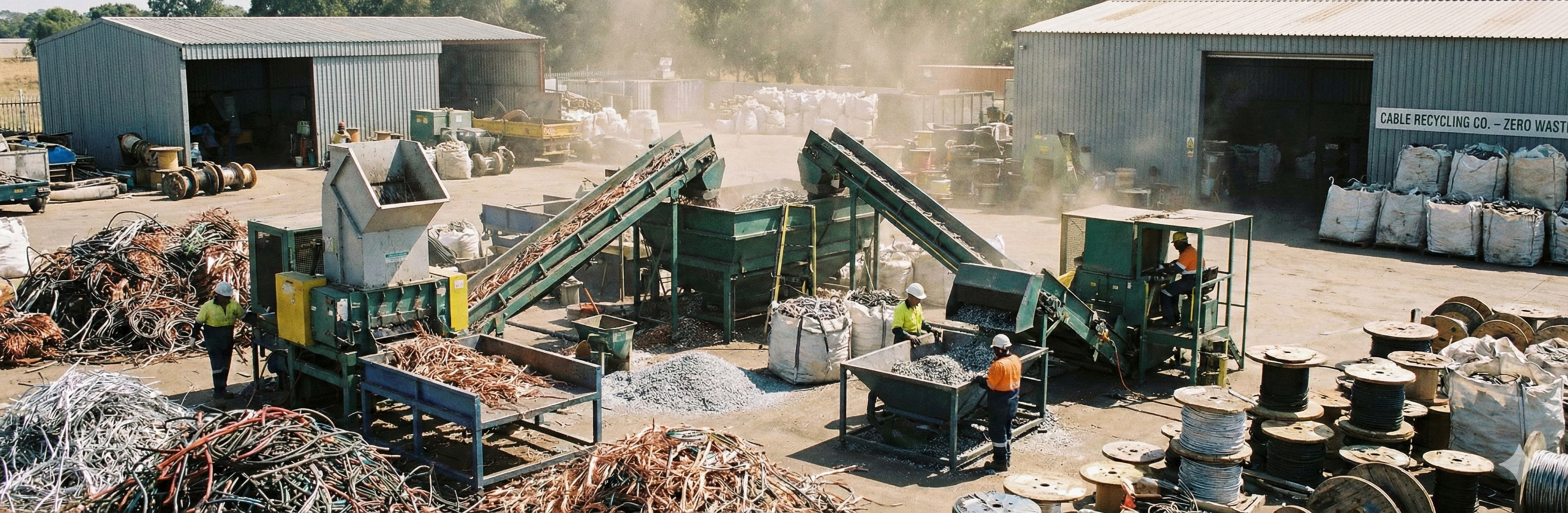
Scrap electrical cables are a valuable form of waste because they contain copper, aluminum, steel, and reusable plastics. Instead of throwing them away or burning them—actions that cause pollution and health hazards—these cables can be reused or properly recycled. Many leftover or undamaged cable lengths can be used again in workshops, temporary wiring, training centers, agricultural setups, or small electrical projects. When cables reach the recycling stage, they are collected, sorted, stripped, or granulated to separate the metals from the insulation. This process recovers high-purity copper and aluminum for new manufacturing, while the recovered plastics are reused in flooring, molding, road materials, or other industrial applications.
Cable recycling has strong environmental benefits. It saves natural resources, reduces the need for mining, lowers carbon emissions, and prevents toxic fumes created by illegal cable burning. Because electrical cables take centuries to decompose, recycling also helps protect soil and water from contamination. Overall, properly managing scrap electrical cables supports a circular economy, reduces waste, and contributes to a cleaner and more sustainable environment.