
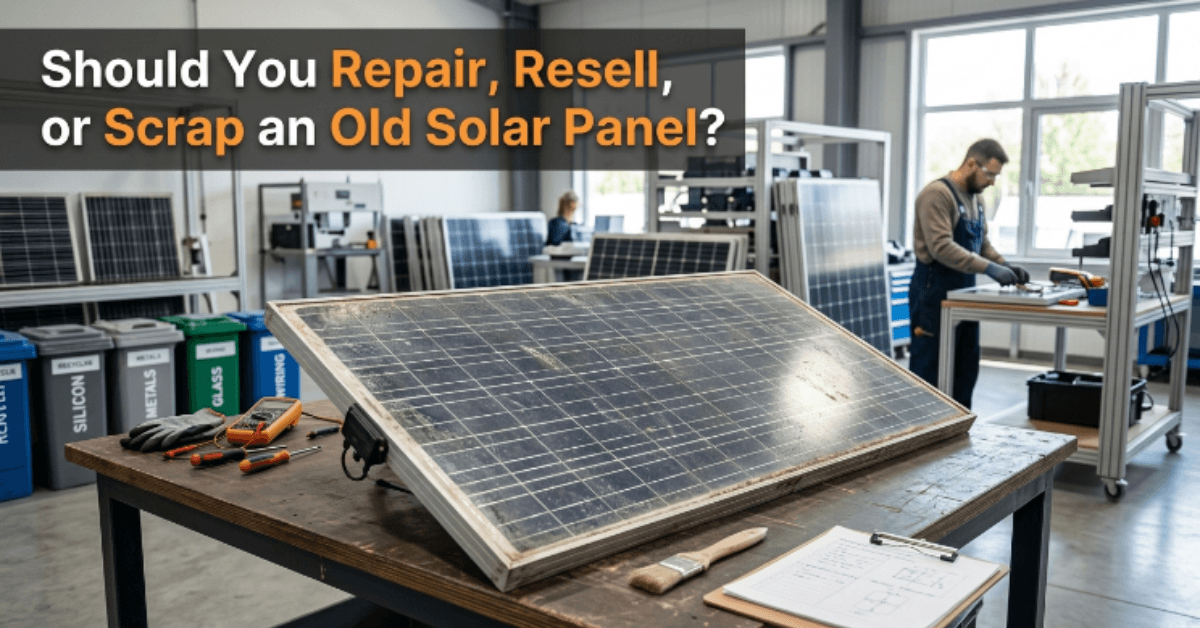
Your solar panel is putting out less than it used to, or you’ve noticed a crack, a brown burn mark, or a strange yellow tint spreading across the surface. Now you have a decision to make: fix it, sell it, or scrap it.
Whether to repair or replace an old solar panel comes down to three simple factors: how bad the damage is, how much power the panel still makes, and what it would cost to keep it running versus pulling it out.
This guide walks you through what to do with old solar panels at every stage, from the first drop in output to the day you finally take them off the roof.
What Happens to an Old Solar Panel?
A solar panel rarely dies overnight. It loses a small percentage of its power output every year, and at some point, that decline meets a decision point. From there, an old panel usually goes one of three ways.
Repair keeps the panel in place and fixes a specific fault: a loose connector, a cracked junction box, minor backsheet damage.
Resale or reuse gives the panel a second life somewhere else, often on a smaller setup that doesn’t need peak performance.
Scrap and recycling break the panel down and recover the glass, aluminum, copper, and silicon inside it so those materials don’t sit in a landfill.
A fourth outcome exists too: some panels just get dumped. That’s the option to avoid. A solar panel that ends up in general waste wastes glass and metal that have real resale value, and depending on the panel type, it can also leach material into the ground over time.
Once you know which of the first three paths fits your panel, you can move on it with confidence instead of leaving a working or valuable panel sitting in storage for years.
Signs Your Solar Panel Is Getting Old or Damaged
Before you decide anything, look at the panel itself. A visual and performance check tells you far more than guessing based on age alone.
- Cracked or shattered glass: Even a hairline crack lets moisture in over time and speeds up internal corrosion.
- Delamination: You’ll notice bubbling or a cloudy patch where the layers inside the panel have started separating.
- Burn marks or discoloration: Brown or black spots usually point to a hot spot, where one cell overheats and drags down the whole string.
- Water ingress and corrosion: A musty smell, visible moisture inside the frame, or rust around the connectors are all warning signs.
- A cracked or peeling backsheet: This is a fire risk, not just a cosmetic issue, because it exposes the internal wiring.
- A steady drop in power output: If your panel produces noticeably less than it did five years ago, and the drop goes beyond the normal 0.5-1.9% yearly degradation rate, something inside it has likely failed.
If a panel shows only one or two of these signs and still tests within a reasonable output range, repair or resale may still be an option. Several of these signs together, especially cracked glass combined with a backsheet defect, usually point straight to scrap.
Old Solar Panel Repair or Replace: Can Old Solar Panels Be Repaired?
Not every fault needs a full replacement. Some issues are genuinely fixable, and others aren’t worth touching.
What you can usually repair:
- A faulty junction box or loose internal wiring
- Minor backsheet cracks, using repair tape or silicone sealant
- Corroded or damaged connectors
- Inverter faults that are affecting the panel’s reported output but not the panel itself
What you generally can’t repair:
- Shattered or heavily cracked glass across the cell area
- Delamination that has already spread across a large section of the panel
- Cell-level burn damage from a long-running hot spot
- Widespread internal corrosion from years of water ingress
Is It Worth Repairing an Old Solar Panel?
Here’s where the math matters more than the fix itself. A panel repair typically costs a few thousand rupees for simple fixes like connector or junction box replacement, and it climbs fast once you factor in labor to remove and reinstall the panel. If your panel is already 15-20 years into its expected 25-30 year lifespan, and the fault is anything beyond minor, spending on repair rarely pays for itself. You’re putting money into a panel that’s already losing efficiency year over year, and a new panel at similar cost will often outproduce it for longer.
Repair makes sense when the panel is relatively young, the fault is minor and isolated, and the repair cost is clearly lower than what you’d pay to buy and install a replacement. Outside of that, resale or scrap usually makes more financial sense.
Are Old Solar Panels Worth Anything? Can They Be Reused or Resold?
Yes, a working panel almost always holds some value, even after years on your roof. The question is how much, and that depends on three things: age, condition, and output.
Your panel is a good candidate for resale or reuse if:
- It’s still producing power and passes a basic performance test
- It’s young enough to keep generating for another 10-12 years, since panels under five years old fetch the highest resale value
- Its degradation rate sits close to the normal average of 0.5-1.9% per year, not far above it
- Any defects are minor and disclosed, ideally after a small refurbishment like a junction box swap
A panel that checks these boxes doesn’t have to go straight to a landfill or a scrap yard. Panels that no longer suit a space-limited rooftop can still run outbuildings, farm pumps, security lighting, or battery-charging setups where peak efficiency doesn’t matter as much. Before you write off a panel just because it’s older, get it tested. A quick check on open-circuit voltage and output current tells you far more than a visual inspection alone, and it’s the same test that separates a panel worth reselling from one that belongs in the scrap pile.
If testing shows the panel is too degraded or damaged to justify chasing a resale buyer, don’t let it sit in storage. You can still sell used solar panels as scrap for their material value, which is often the faster and simpler route once a panel is past its resale window.
Can Old Solar Panels Be Recycled?
Yes, and this is where a panel that’s too damaged to repair or resell still has value left in it. A solar panel isn’t just glass on a frame; it’s a layered product, and every layer has a buyer.
Here’s what typically comes out of a recycled panel:
- Aluminum frame: Around 10% of the panel’s weight, and the easiest part to strip and sell straight into standard metal recycling
- Glass: Makes up the majority of the panel’s total weight and, once separated, goes back into industrial glass production
- Copper: Pulled from the internal wiring and junction box, always in steady demand from scrap buyers
- Silicon cells and silver: A smaller share by weight, but the most valuable materials in the panel, used in the cell’s electrical contacts
- EVA (ethylene-vinyl acetate) and backsheet material: The toughest layers to separate cleanly, since they’re built to bond permanently, but recoverable with the right process
The recycling process starts with removing the aluminum frame and junction box, since these strip off easily and carry immediate resale value. The panel then goes through delamination or shredding to separate the glass from the silicon layer underneath, and the recovered materials get sorted and sold into scrap and manufacturing supply chains. A panel that fails every test for repair or resale still has resale value once it’s broken down this way, instead of taking up space in a landfill and leaching material into the ground.
If you’re weighing your options and want a straight answer on what your panels are worth once they’re beyond saving, talk to a solar scrap dealer who can walk you through pricing based on weight, condition, and quantity.
Repair, Resell or Scrap an Old Solar Panel? Here’s How to Decide
Use this quick checklist to cut through the decision:
- Repair if the panel is under 15 years old, the fault is isolated (junction box, wiring, small backsheet crack), and the repair cost is clearly less than a replacement panel.
- Resell or reuse if the panel still tests well, degrades within the normal range, and has no cracked glass or major backsheet damage.
- Scrap and recycle if the glass is shattered, the degradation rate is well above average, the backsheet is compromised, or the repair cost outweighs any benefit.
Most panels don’t sit neatly in one category. A panel with a cracked backsheet but a good output score, for example, might still be worth reselling once you disclose the defect and lower the price. When you’re not sure which bucket a panel falls into, get it tested before you decide anything else.
The Bottom Line
Repair, resale, and scrap all have a place, and the right call depends on what your inspection and test results actually show, not on the panel’s age alone. A young panel with one isolated fault is worth fixing. A panel that still tests well and degrades at a normal rate is worth reselling. And a panel with shattered glass, a compromised backsheet, or output that’s dropped well past the usual curve has already told you it’s done, so there’s no reason to let it take up space on your roof or in storage.
Once you know which bucket your panel falls into, the decision stops being complicated. If it lands in the scrap pile, Solar Scrap in Karachi takes old and end-of-life solar panels off your hands and handles the recycling process from pickup to material recovery, so that last step is one less thing you have to sort out on your own.
What to Do With Old Solar Panels
Once you’ve sorted your panels into repair, resale, or scrap, the next move is just execution. For panels you’re keeping, have a qualified technician handle the fix rather than attempting DIY wiring or backsheet repairs. For panels you’re reselling on your own, document the age, wattage, brand, and condition upfront, since buyers pay more for panels with a clear history. For panels that are done, don’t let them sit in storage; hand them off for proper recycling instead of putting them in regular waste.
Frequently Asked Questions
Is it worth repairing an old solar panel?
It depends on the panel’s age and the fault. A young panel with a minor, isolated issue is usually worth fixing. A panel past 15-20 years with major glass or backsheet damage almost never justifies the repair cost.
Are old solar panels worth anything?
Yes. A working panel holds resale value based on its age, output, and condition, and even a non-working panel holds scrap value once it’s broken down for glass, aluminum, copper, and silicon.
Are old solar panels recyclable?
Yes. Around 85% or more of a panel’s weight, including the frame, glass, and internal metals, can be recovered and sold back into manufacturing and scrap supply chains.
Can old solar panels be reused without recycling?
Yes, as long as they pass a basic performance and safety check. A panel that’s not efficient enough for your main roof can still power smaller setups like outbuildings, pumps, or battery-charging stations.
How do I know if my panel should be scrapped instead of repaired?
If the glass is shattered, the backsheet is cracked or peeling, or the panel’s output has dropped well beyond the normal degradation rate, repair usually isn’t worth the cost, and scrapping makes more sense.
What’s the fastest way to sell or scrap old solar panels in Karachi?
Get the panels tested for output and condition, document the details, and reach out to a scrap buyer who can quote you based on weight, condition, and quantity so you’re not stuck holding panels you no longer need.