
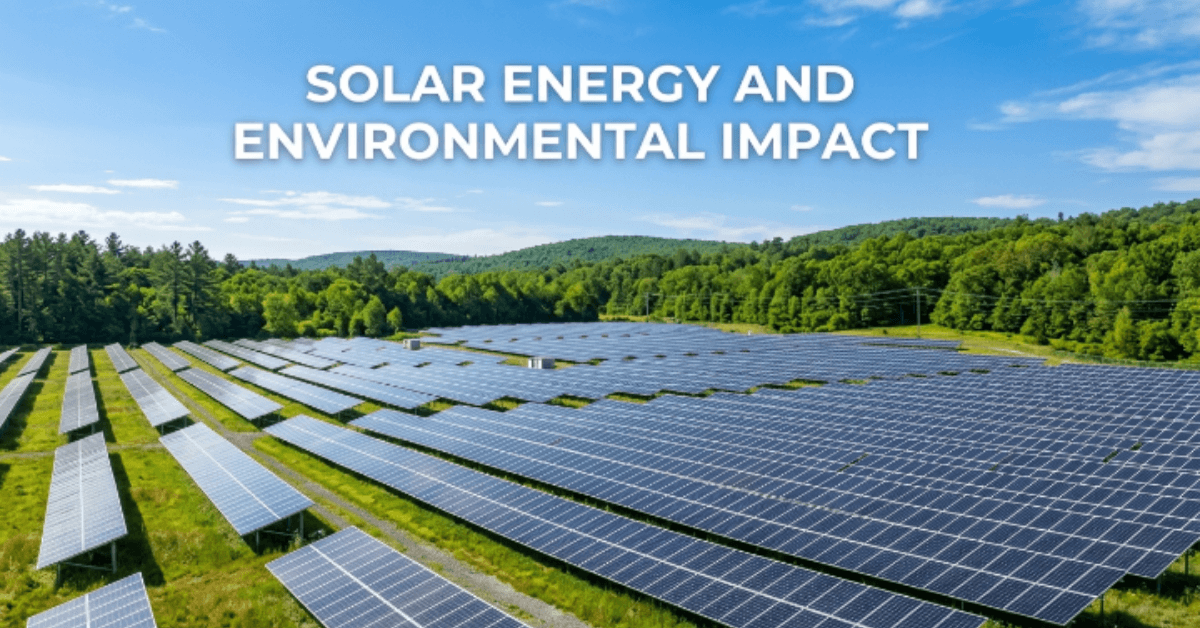
Every panel on your roof started life as raw quartz pulled out of the ground, processed through high-heat furnaces, and shipped across the world before it ever produced a single watt of electricity. That process leaves a footprint. So does the day, decades from now, when that same panel stops working and needs to go somewhere. Solar still comes out far ahead of fossil fuels on almost every measure, but pretending it has zero impact skips over the parts that actually matter for anyone trying to make an informed decision.
This guide walks through the environmental impact of solar energy from every angle: the benefits, the trade-offs, what the research actually shows about panel life cycles, and what all of this means for a country like Pakistan, where solar adoption is moving fast but waste management hasn’t caught up.
What Is the Environmental Impact of Solar Energy?
The environmental impact of solar energy covers everything a solar system touches from raw material to retirement: the mining and processing that go into the panels, the energy used to manufacture them, their decades of clean electricity generation, and what happens once they stop working. Most environmental conversations around solar only look at one slice of this picture, usually the generation phase, where solar produces zero direct emissions. A fair assessment has to look at the whole cycle, not just the part that makes solar look good.
The scale of the system matters too. A rooftop array on a home in Karachi has a very different footprint than a utility-scale solar farm spread across acres of land. Smaller systems barely register on land use or wildlife impact. Larger projects require more scrutiny around siting, water use, and habitat disruption.
The Environmental Benefits of Solar Energy
Before getting into the trade-offs, it helps to see why solar earns its reputation in the first place.
Fewer greenhouse gas emissions
Once installed, a solar panel produces electricity without burning anything. No coal, no gas, no combustion byproducts. Life cycle studies from the National Renewable Energy Laboratory put solar’s emissions at roughly 40 grams of CO2 equivalent per kilowatt-hour, compared to close to 1,000 grams for coal. That’s a difference of about 25 times less carbon per unit of energy, even after accounting for manufacturing and transport.
Cleaner air and fewer health problems
Fossil fuel plants release nitrogen oxides, sulfur dioxide, and particulate matter, pollutants tied directly to asthma, bronchitis, and cardiovascular disease. Replacing that generation with solar cuts these pollutants at the source, which translates into fewer respiratory illnesses and fewer missed workdays in the surrounding community.
Far less water use
Traditional power plants, especially coal and nuclear, use enormous volumes of water for cooling. Standard rooftop solar panels use almost none. The main water draw is occasional panel cleaning, which isn’t even necessary for most systems to function well.
These benefits are real and well documented. But they don’t erase the fact that panels have to be made, transported, and eventually disposed of, and each of those stages has its own footprint.
Is Solar Energy Good for the Environment? Looking at the Full Life Cycle
Yes, but the honest answer requires looking past the “zero emissions” headline and into the manufacturing and disposal stages that most marketing skips.
Manufacturing takes energy, and it isn’t clean at first.
Making a solar panel starts with quartz, which gets processed into silicon through high-heat furnaces and chemical treatment. That silicon then goes through several more energy-intensive steps before it becomes a working cell. This is where most of a panel’s lifetime emissions actually happen; researchers estimate that 60% to 70% of a panel’s total carbon footprint comes from this upfront manufacturing stage, not from decades of operation.
Energy payback time tells the real story.
The question that matters most: how long does a panel need to run before it generates as much energy as it took to build? For modern silicon panels, that answer is roughly one to two years. Given that most panels operate for 25 to 30 years, a panel spends the vast majority of its working life producing pure energy gain, with no debt left to repay.
Chemicals are part of manufacturing, not just an afterthought.
Producing solar-grade silicon involves hazardous substances like hydrochloric acid, sulfuric acid, and hydrogen fluoride. Handled correctly, these pose minimal risk to workers or the environment. Handled poorly, especially by manufacturers cutting corners on safety and waste treatment, they can cause real harm. This is less about solar itself and more about which manufacturers you buy from; the same is true for semiconductor production of any kind.
Compared side by side with fossil fuels, solar still comes out ahead by a wide margin. Coal has to be mined, cleaned, transported, and burned continuously for the entire life of a plant, generating pollution at every single stage. Solar front-loads its footprint in manufacturing, then runs clean for decades.
Are Solar Panels Really Clean Energy?
You’ll come across arguments online claiming solar panels take more energy to produce than they ever generate, or that manufacturing does more damage than the panels prevent. These claims usually come from outdated data or ignore how much panel efficiency has improved.
Early life cycle studies used panel efficiencies around 13% to 14%. Today’s panels regularly hit 19% to 22% efficiency, some even higher in lab settings. That efficiency gain means more clean electricity from the same manufacturing footprint, which pulls the energy payback time down year after year. Even the worst-case estimates for solar still beat the best-case estimates for coal by a wide margin.
The recycling argument holds more water. Solar panels aren’t yet recycled at the scale they should be, mostly because recovery costs currently exceed the value of materials recovered. That’s a real gap in the industry, but it’s a logistics and infrastructure problem, not a flaw in solar as a technology. The same growing pains happened with auto recycling and e-waste recycling before those industries matured into standard practice.
Land Use and Wildlife
Rooftop solar has almost no land footprint; it uses space that’s already built on. Utility-scale solar farms are a different conversation. Large projects use roughly 3 to 4 acres per megawatt, and clearing land for a project can disturb soil, remove vegetation, and fragment habitats that wildlife depend on for migration and feeding.
The good news is that siting decisions make a big difference. Projects built on brownfields, former mining sites, or existing transportation corridors avoid disturbing untouched land altogether. Some developers are experimenting with “agrivoltaics,” combining solar panels with crop production or grazing on the same land, which can actually improve soil moisture and crop yields underneath the panels. Floating solar installations on reservoirs and irrigation ponds are another option that skips land use entirely while reducing water evaporation.
Water use during operation is minimal for standard PV systems, mostly limited to occasional panel washing. Concentrating solar thermal plants, a less common technology that uses mirrors and heat rather than direct photovoltaic conversion, use considerably more water for cooling, which matters most in the dry, sun-heavy regions where these plants tend to get built.
What Happens to Solar Panels at the End of Their Life?
A typical solar panel lasts 25 to 30 years. Most panels installed globally are still young, which is exactly why end-of-life planning matters now; the wave of retirements is coming, and infrastructure needs to be ready before it arrives.
What’s actually in a panel?
Crystalline silicon panels are mostly glass and aluminum (about 87%), plus silicon, polymers, and small amounts of copper, silver, and tin. The materials of real concern are lead, used in soldering (under 0.1%), and, in some panel types, cadmium. These aren’t present in large quantities, but they still need proper handling rather than a spot in a regular landfill.
Why recycling hasn’t caught up yet.
Recovering materials from a used panel currently costs more than those materials are worth on the open market. That math will shift as panel volumes grow and recovery techniques improve, but for now, it’s the main reason recycling rates remain far lower than they should be. Left unmanaged, retired panels often end up mixed in with general e-waste, where valuable materials go to waste and hazardous components risk leaching into soil or water.
This is exactly the gap dedicated solar panel recycling solutions are built to close: separating recoverable metals and glass instead of letting a panel sit in a landfill or be broken down by hand without safety measures.
The Environmental Impact of Solar Energy in Pakistan
Solar makes sense here faster than almost anywhere else.
Pakistan gets some of the highest solar irradiance in the world. With frequent power outages in cities like Karachi, Lahore, and Faisalabad, solar has become less of a lifestyle choice and more of a practical necessity for homes and businesses. Research on local panel performance puts the energy payback time at around 2.5 to 3.5 years, slightly longer than in some other regions, but still a fraction of a panel’s 25-year lifespan.
Agricultural solar comes with a water trade-off worth watching.
Farmers switching from diesel-powered tube wells to solar-powered irrigation cut fuel costs and emissions significantly. But cheaper pumping also means some farmers pump more groundwater than before, which can offset the environmental win if it isn’t paired with better water management. Solar helps the emissions side of the equation; it doesn’t automatically fix groundwater sustainability on its own.
The recycling gap is the biggest unresolved issue.
Pakistan doesn’t yet have a nationwide policy for handling solar panels or batteries at end of life. Most of the country’s earliest solar installations are still active, but with panels typically rated for 20 to 25 years, the first real wave of retirements isn’t far off. Without a formal system in place, panels containing lead and other regulated materials risk ending up in general waste streams, handled by informal scrap collectors without protective measures. Setting up proper solar waste disposal channels now, before that wave hits, is a far cheaper and safer path than dealing with the fallout afterward.
Solar remains a clear net positive for the environment and the energy grid, but only if the end-of-life piece gets built out alongside the installation boom, not years after it.
How to Lower Your Solar System’s Environmental Footprint
If you already have solar panels or you’re planning an installation, a few habits make a real difference over the system’s lifetime.
- Choose panels from manufacturers with transparent supply chains. Companies that disclose their chemical handling and labor practices tend to produce cleaner panels overall.
- Don’t let old panels sit in storage or end up in general trash. Whether they’ve failed early or reached the end of a working system, panels should go to a facility equipped to separate and recover materials properly.
- Plan ahead for large installations. If you’re decommissioning a commercial or utility-scale solar setup, working with a proper solar plant dismantling service keeps materials out of landfills and recovers value that would otherwise go to waste.
- Keep an eye on system efficiency. A well-maintained system generates more electricity per panel over its lifetime, which improves the entire environmental equation without any extra manufacturing footprint.
None of these steps require major investment, mostly just choosing the right partners when a panel’s working life comes to an end.
Final Thoughts
Solar energy isn’t a perfect technology, and treating it that way does the industry a disservice. What matters is the comparison that counts: solar’s full life cycle impact, from mining to disposal, comes in far below what fossil fuels produce every single day they operate. The gap that still needs closing is what happens after a panel’s working life ends, and that’s a solvable problem with the right recycling infrastructure in place.
At Solar Scrap, this is the part of the solar life cycle we focus on: recovering value from panels, batteries, and solar equipment that have reached the end of the road, instead of letting them sit as waste. If you’re in Karachi and have solar equipment that needs proper recycling or dismantling, it’s worth having that conversation before those panels become a bigger problem than they need to be.
Frequently Asked Questions
What is the environmental impact of solar energy?
Solar energy produces no direct emissions while generating electricity, but manufacturing panels requires energy and chemicals, and disposal at end of life needs proper handling. Overall, solar’s footprint is a small fraction of what fossil fuels produce across their full life cycle.
Is solar energy good for the environment?
Yes. Even accounting for manufacturing emissions, solar produces roughly 25 times less carbon dioxide per unit of electricity than coal, and it pays back its manufacturing energy cost within one to two years of operation.
Are solar panels really clean energy?
Largely, yes. Claims that panels use more energy than they generate come from outdated efficiency data. Modern panels are far more efficient than the ones used in early studies, which makes their real-world footprint smaller than older comparisons suggest.
What is the life cycle environmental impact of solar panels?
Most of a panel’s emissions happen during manufacturing, an estimated 60% to 70% of its total footprint. Operation contributes very little, and end-of-life disposal or recycling makes up the remainder, depending on how the panel is handled.
What happens to solar panels at the end of their life?
Panels are typically rated for 25 to 30 years. At the end of life, they should go through recycling to recover glass, aluminum, silicon, copper, and silver. Without proper recycling infrastructure, panels risk ending up mixed with regular waste, where hazardous materials like lead can pose environmental risks.
What is the environmental impact of solar energy in Pakistan?
Solar offers a strong environmental payoff for Pakistan given the country’s high solar irradiance and reliance on fossil-fuel power generation. The main unresolved issue is end-of-life management; the country doesn’t yet have a nationwide system for recycling panels and batteries, which will matter more as the first wave of installations starts aging out over the next decade.