
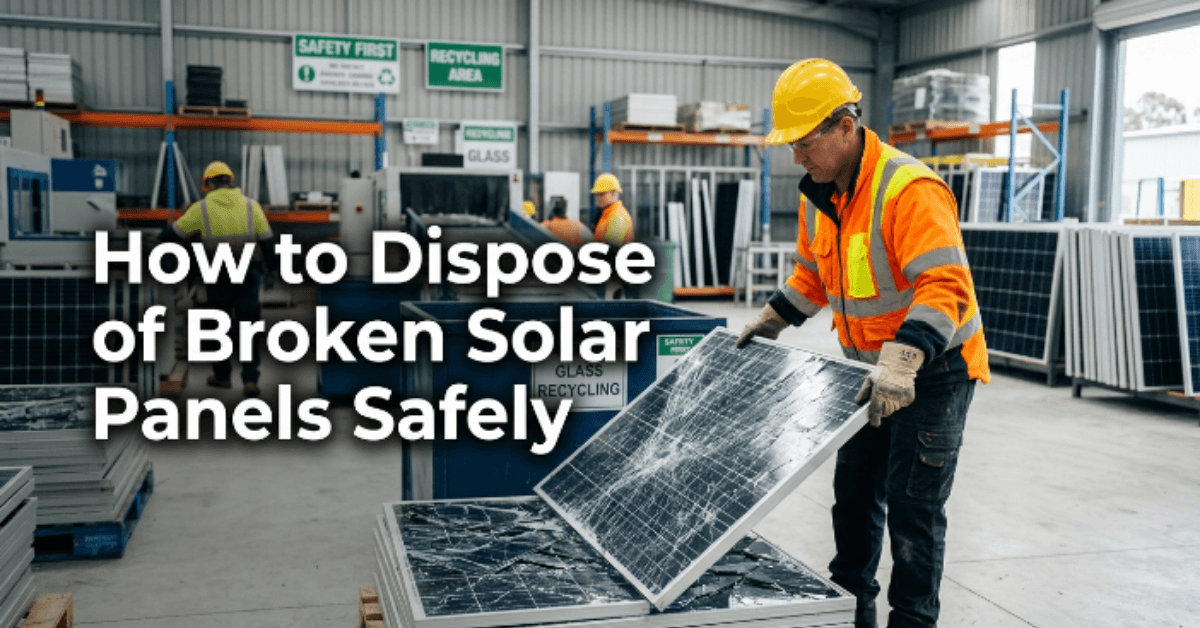
A cracked panel on your roof or in your warehouse isn’t the same problem as a working panel you’re retiring after 25 years. A broken panel can have exposed wiring, shattered glass, or damaged cells, and that changes how you need to handle it. If you’re not sure what to do next, here’s exactly how to dispose of broken solar panels safely, from the moment you spot the damage to the moment they leave your property.
Are Broken Solar Panels Hazardous?
Most of what’s inside a solar panel is glass, aluminum, and silicon, and none of that puts you or the environment at serious risk on its own. Some older or thin-film panels also contain small amounts of lead or cadmium, and that’s the part regulators pay attention to.
On their own, sealed panels present low risk. Once the glass cracks or the frame separates, that seal breaks, and the panel can expose wiring or shed glass fragments. So the honest answer is: broken solar panels aren’t automatically toxic, but they need more careful handling than an intact panel does, and you shouldn’t treat them like ordinary construction debris.
What Happens to Broken Solar Panels If You Just Throw Them Out
If you dump a broken panel in general waste or a landfill, you skip the steps that keep it safe. Glass and metal in a panel take a long time to break down, and any trace of lead or cadmium can leach into soil and water over the years. In many regions, this isn’t just a bad idea; it’s against the law.
Environmental agencies increasingly classify solar waste separately from regular trash, and improper disposal can bring fines on top of the environmental cost. As solar adoption grows, the volume of end-of-life and damaged panels is climbing fast, and that makes proper disposal for damaged solar panels more relevant every year, not less.
How to Safely Handle Broken Solar Panels
Before you touch anything else, take care of the safety basics. A damaged panel that’s still connected to your system can carry an electrical charge, and broken glass adds a physical hazard on top of that.
- Shut down the system first. Turn off the solar array before you approach a cracked or shattered panel to rule out electrical hazards.
- Photograph the damage. Clear images from a few angles help with insurance claims, warranty checks, and give the recycler a sense of what they’re picking up.
- Skip the DIY repair. Panels carry electrical risk and layered components that aren’t meant for casual fixing, so leave resealing or rewiring to a certified technician.
- Wear gloves when moving panels. Cracked glass and exposed edges cut easily, so treat every broken panel as sharp until proven otherwise.
- Keep damaged panels away from intact ones. Stacking a cracked panel with working ones risks spreading glass fragments and damaging panels that are still fine.
These steps protect you, your team, and the materials that are still worth recovering.
How to Dispose of Cracked Solar Panels: Step by Step
Once the panel is safely off the system, the disposal process itself is straightforward if you follow it in order.
1. Decide if it’s repairable. Minor frame dents or surface scratches sometimes get fixed. But if the glass is shattered, cells are cracked, or water has gotten in, repair rarely restores full function, and recycling becomes the better call.
2. Contact your installer or manufacturer. Many installers run take-back programs, and some manufacturers have their own recycling initiatives for panels they sold. This is often the fastest route, especially if the panel is still under warranty.
3. Reach out to a specialized recycler. If your installer can’t help, look for a solar waste disposal service that actually processes photovoltaic material rather than a general scrap yard that just strips the metal frame. A specialist can recover glass, silicon, and copper properly instead of sending most of the panel to landfill anyway.
4. Transport the panel with care. Keep it upright where possible, avoid stacking heavy items on top of it, and use padding between panels if you’re moving more than one. Rough handling during transport is one of the most common causes of extra breakage.
5. Let the recycler process it. From there, the facility takes over sorting, testing, and breaking the panel down into recoverable parts.
Can Broken Solar Panels Be Recycled?
Yes, and this surprises a lot of people. A cracked or shattered panel still contains the same glass, aluminum, silicon, and copper wiring as an intact one; it’s just in worse shape physically. Recyclers use two main approaches:
Mechanical recycling removes the aluminum frame and junction box first, then separates the glass layer from the silicon cells using cutting or crushing equipment. This method recovers over 80% of a panel’s materials and works for most standard modules, including damaged ones.
Chemical and thermal recycling goes further. Heat burns off plastic layers and adhesives to free up metals like silver and copper, while chemical processes dissolve the silicon cells to isolate what’s inside. This route recovers up to 95% of materials but needs specialized equipment, so it costs more than mechanical processing.
For a broken panel, sorting and testing usually happen first to confirm which materials survived the damage intact, and then the panel goes into whichever stream makes sense.
What to Do With Damaged Solar Panels That Can’t Be Recycled
Not every broken panel is a candidate for full recycling, and that doesn’t mean it has to go to waste. A damaged panel that still produces some current can run low-draw setups like garden lighting or an off-grid charging station.
Schools and training programs sometimes take non-functional panels to teach students how solar systems work from the inside out. Frames, junction boxes, and wiring can also be salvaged individually even when the panel itself is beyond use.
Some nonprofits also accept partially working panels for underserved communities, so a panel that can’t go back on a roof still has options. Before you write off a broken panel completely, ask your recycler or installer whether any part of it still has a second life.
Disposal Rules You Need to Know
Solar waste doesn’t fall under the same rules as household trash, and the specifics vary by region. In Pakistan, the Pakistan Environmental Protection Agency (Pak-EPA) and the Climate Change Division set the framework for how electronic and hazardous waste gets managed, and disposal practices are expected to align with the National Environmental Quality Standards (NEQS).
Dumping damaged panels informally or handing them to an unlicensed scrap collector can put you on the wrong side of these standards, even if the intent wasn’t to cause harm. Checking current regulations before you dispose of a large batch of panels, especially for a commercial installation, saves you from fines and keeps the materials out of the wrong hands.
Why Work With a Solar Expert
A general scrap metal buyer will usually strip the aluminum frame and leave the rest, which means the glass, silicon, and copper inside never get recovered properly. A dedicated solar scrap dealer works differently. They know how to sort panels by condition, separate hazardous components from the rest, and route each material to the right recycling stream.
If you’re dealing with a handful of cracked panels or a full commercial batch after storm damage, working with someone who specializes in this exact material saves you time and gets more of the panel back into circulation instead of a landfill.
The Bottom Line
A broken solar panel isn’t something you toss in the bin, and it isn’t something to panic over either. Shut down the system, document the damage, keep it separate from working panels, and hand it to someone who knows how to process it.
Whether you go through your installer, the manufacturer, or a specialist recycler, the goal stays the same: recover what’s usable, keep the rest out of the ground, and stay on the right side of local regulations while you’re at it. Take the time to sort and store panels correctly at the start, and the rest of the disposal process moves a lot faster on the other end.