
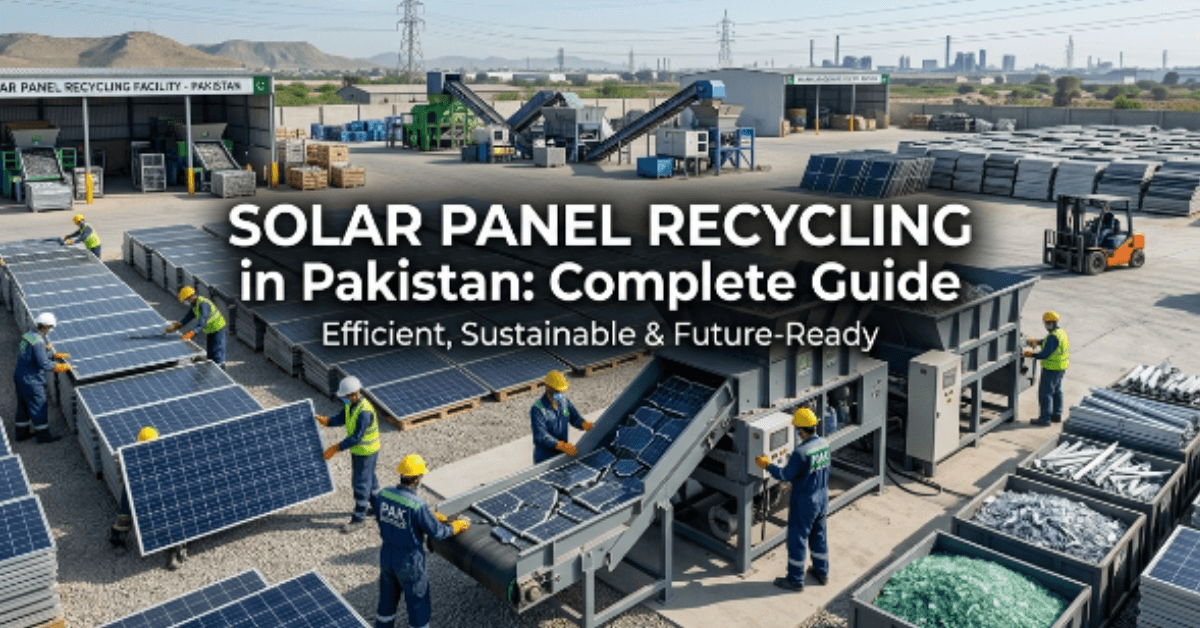
Solar energy adoption in Pakistan is rising fast, from rooftop systems in Lahore and Karachi to off-grid installations in rural Punjab and Sindh.
But what most people don’t ask is what happens once these panels wear out. A typical solar panel lasts 25 to 30 years, but that clock is already ticking on the systems installed over the past decade.
If Pakistan doesn’t build a proper recycling system now, the country could face a serious waste problem within the next two decades. This guide walks you through the solar panel recycling process, what happens to old panels, and what you can do as an owner to dispose of yours the right way.
Can Solar Panels Be Recycled in Pakistan?
Yes, solar panels can be recycled in Pakistan. The materials inside them, glass, aluminum, silicon, copper, and silver, are all recoverable with the right equipment and process. What’s missing isn’t the technical possibility; it’s scale.
Recycling facilities in the country are still few, and most panel owners simply don’t know where to take a dead or damaged panel. That gap is closing as dedicated solar panel recycling solutions start operating in cities like Karachi, but demand still outpaces supply.
What Happens to Old Solar Panels When You Don’t Recycle Them
Without a recycling plan, old panels typically end up in general landfills alongside household trash. That creates two problems. First, solar panels contain small amounts of hazardous materials like lead and cadmium, and these can leach into soil and groundwater over time.
Second, you lose out on the valuable materials sitting inside every panel. Glass alone makes up roughly 70 to 76% of a panel’s weight, and it’s fully reusable in new glass products or construction materials. If you send panels straight to a dump, you waste both money and resources that a proper recycling facility would recover.
What’s Actually Inside a Solar Panel
Before you can understand the recycling process, it helps to know what you’re recycling. A standard crystalline silicon panel breaks down roughly like this:
- Glass: 70-76% of total weight, used for the front cover
- Aluminum: 8-15%, forms the frame
- Polymer (encapsulant and backsheet): around 10%
- Silicon cells: 3-5%
- Other metals (copper, silver, tin): roughly 1%
Each of these has a market for reuse once it’s properly separated, which is exactly what the recycling process is designed to do.
How Are Solar Panels Recycled? The Complete Process
Solar panel recycling isn’t a single step; it’s a sequence of processes designed to separate and recover each material without contaminating the others.
1. Collection and transportation
Decommissioned or damaged panels get collected from installation sites, whether that’s a rooftop, a solar farm, or a warehouse, and transported to a facility set up for photovoltaic waste.
2. Sorting and testing
Every panel gets sorted and tested on arrival. Panels with minor damage may be flagged for repair and resale, while severely damaged or non-functional units go straight into the recycling stream.
3. Disassembly
Technicians remove the aluminum frame and junction box first, since these come apart easily and recycle without further processing.
4. Glass separation
The glass layer, which accounts for most of a panel’s weight, gets peeled and separated from the layers underneath it.
5. Thermal processing
The remaining silicon cells and polymer layers go through thermal treatment at high temperatures, usually between 500 and 600°C, which burns off the encapsulant material (typically EVA) and leaves clean silicon behind.
6. Chemical processing and material recovery
For high-purity recovery of silicon, silver, and other trace metals, facilities use acid baths or hydrometallurgy to strip out impurities. Copper and silver from the electrical components get extracted separately and prepared for reuse.
7. Repurposing
Once separated, materials head back into new supply chains: silicon into new solar cells, aluminum and glass into construction or manufacturing, and metals into electronics.
Done correctly, this process recovers 95% or more of a panel’s materials. That’s a meaningful number when you consider how many panels Pakistan will need to process over the next 15 to 20 years.
Can Broken Solar Panels Be Recycled?
Yes, and this matters more in Pakistan than in most markets. Panels here often get damaged by storms, transport accidents, or even bullet strikes, and owners frequently assume a cracked panel is just waste. It isn’t.
A broken panel still contains all the same recoverable materials as an intact one. Recyclers typically sort damaged panels first, checking whether the unit can be repaired and resold or whether it needs to move directly into the recycling stream.
Either way, a broken panel has value, so don’t send it to a scrap heap without checking with a recycler first.
Why Solar Panel Recycling Matters for Pakistan
Pakistan’s solar capacity is growing across both urban and rural areas, and that growth brings a waste question the country hasn’t fully addressed yet. Globally, photovoltaic e-waste is projected to reach 80 million tonnes by 2050.
Pakistan’s share of that number will grow in step with its installation rate. Left unmanaged, this waste contributes to land degradation, soil contamination, and public health risks near disposal sites.
A working recycling system addresses this directly: it keeps hazardous materials out of the environment, reduces landfill pressure, and supports Pakistan’s environmental protection goals and its alignment with the UN Sustainable Development Goals around clean energy and responsible consumption.
There’s also an economic case here. Pakistan is early in this market, which means there’s real opportunity to build a local recycling industry instead of relying on raw material imports for future panel manufacturing.
Challenges Pakistan Faces in Solar Panel Recycling
A few obstacles stand between Pakistan and a fully developed recycling system.
- Limited infrastructure: Recycling facilities equipped to handle photovoltaic waste remain rare compared to the number of panels being installed.
- High costs: Recycling still costs more than manufacturing new panels in most cases, which discourages both owners and facilities from prioritizing it.
- Low awareness: Many panel owners simply don’t know recycling is an option, so panels end up as general waste by default.
- Regulatory gaps: Clear national guidelines on collection, transportation, and disposal of solar waste are still developing.
None of these are permanent. They’re the same growing pains other countries went through before building out formal recycling networks.
Where Pakistan’s Policy Stands (and Where It’s Headed)
The Pakistan Environmental Protection Agency (Pak-EPA) and the National Electric Power Regulatory Authority (NEPRA) both have a role to play in shaping how solar waste gets handled going forward, from setting disposal standards to regulating how installers and manufacturers manage end-of-life panels.
Organizations like the International Renewable Energy Agency (IRENA) have already published guidance on end-of-life management that Pakistan can draw from directly rather than starting from scratch.
One policy model worth watching is Extended Producer Responsibility (EPR), used in the EU under its Waste Electrical and Electronic Equipment Directive. Under EPR, manufacturers take responsibility for collecting and recycling their products once they reach end of life. Pakistan doesn’t have this in place yet, but it’s a logical next step as the local solar market matures. If Pakistan pairs EPR with local drop-off points and public awareness campaigns, it would close most of the gaps in the current system.
How to Recycle Your Solar Panels the Right Way
If you own solar panels in Pakistan, here’s how to handle their end of life responsibly:
- Plan ahead. Ask your installer about end-of-life services before you even install your system.
- Check for damage regularly. Catching cracked or degraded panels early gives you more options: repair, resale, or recycling.
- Find a specialized recycler. Don’t send panels to a general scrap dealer. Look for a facility that offers dedicated solar panel recycling solutions and knows how to separate glass, silicon, and metals properly.
- Keep documentation. A record of where and how your panels were recycled protects you if regulations tighten later.
Choosing the Right Solar Scrap Dealer
Not every scrap buyer knows how to handle photovoltaic waste correctly. A panel dumped with mixed metal scrap often loses most of its recoverable value, and any hazardous components inside it go unmanaged.
When you work with an established solar scrap dealer, your panels get sorted, tested, and processed through the right recovery methods instead of being treated as generic electronic waste. If you’re decommissioning a rooftop system or clearing out damaged units from a solar farm, this is the difference between responsible disposal and adding to Pakistan’s future waste problem.
Frequently Asked Questions
Can solar panels be recycled in Pakistan?
Yes. The materials are recoverable, and dedicated recycling facilities are starting to operate in major cities, though the infrastructure is still developing nationwide.
How are solar panels recycled?
Through a multi-step process: collection, sorting, disassembly, thermal treatment to remove polymer layers, and chemical processing to recover silicon and metals like silver and copper.
What happens to old solar panels if they aren’t recycled?
They typically end up in landfills, where hazardous materials like lead and cadmium can leach into soil and water over time.
Can broken solar panels be recycled?
Yes. Damaged panels still contain the same recoverable materials as intact ones and should go to a recycler rather than general waste.
Final Thoughts
Pakistan’s solar boom is a genuine win for the country’s energy future, but it comes with a responsibility that’s easy to overlook. The panels going up on rooftops today will need a proper exit plan in 20 to 25 years, and the systems being decommissioned right now, damaged or degraded, need one already. Recycling protects the environment, recovers real value from materials that took energy to produce, and positions Pakistan to build its own recycling industry instead of playing catch-up later. If you have panels reaching the end of their life or damaged units sitting unused, don’t wait. Talk to a recycler who knows how to handle them properly.